- Condenser
- Refrigerator Evaporator
-
Compressors
Refrigerator Compressors Shop all
-
Motors and Fans
Motors and Fans Shop all
-
Refrigerator Accessories
Refrigerator Accessories Shop all
-
Air Conditioner Accessories
Air Conditioner Accessories Shop all
- Refrigerants
-
Repair Tools
Repair Tools Shop all
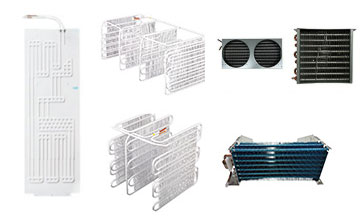
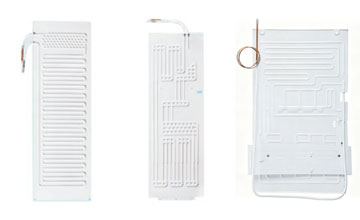
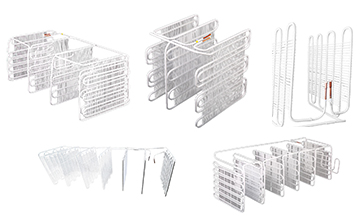
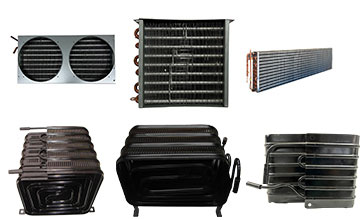
Comprehensive Maintenance Technology for Condensers
Aug 27,2026 - 11:16 Reading:188
Condensers are core heat exchange devices in refrigeration, HVAC, chemical processing, and power generation systems, playing a critical role in releasing heat from the working fluid and condensing gaseous refrigerant into liquid form. Their operating condition directly determines the heat exchange efficiency, energy consumption, operational stability, and service life of the entire equipment array. During long-term continuous operation, condensers are susceptible to multiple factors such as dust and dirt buildup, scale accumulation, fluid corrosion, mechanical wear, electrical aging, and ambient temperature fluctuations. These can lead to degraded heat transfer, abnormal pressure, unusual equipment noise, pipeline blockage, and leakage failures. Such issues not only significantly increase energy consumption and reduce operational efficiency, but may also trigger unit overload shutdowns and component damage, raising maintenance costs and downtime losses.
1. Introduction
As the core terminal device in heat exchange systems, condensers are widely used in central air conditioning, industrial refrigeration units, chemical condensation and recovery systems, power cooling systems, and cold chain refrigeration equipment. Their core working principle is to transfer heat from high-temperature, high-pressure gaseous fluid within the system to a cooling medium via heat exchange, rapidly condensing the gaseous fluid into liquid. This completes the system’s heat cycle and fluid state transition, ensuring thermal balance and continuous operation of the entire equipment setup.
Based on cooling methods, mainstream condensers in the industry fall into three categories: air-cooled condensers, water-cooled condensers, and evaporative condensers. Different types vary significantly in structure, heat exchange principle, and operating conditions, resulting in different failure causes and maintenance priorities. Air-cooled condensers rely on forced air convection from fans for heat dissipation, with core risks including dust buildup on fins, catkin blockages, and fan malfunctions. Water-cooled condensers operate via circulating cooling water, with primary issues being pipeline scale, sludge accumulation, and water-induced corrosion. Evaporative condensers combine the advantages of air and water cooling, but are prone to problems such as sump sludge buildup, nozzle clogging, and scale on drift eliminators.
In actual equipment operation and maintenance, most failures stem from inadequate daily maintenance, non-standard operations, and insufficient upkeep. Data shows that condensers without regular maintenance experience a 15%–30% drop in heat exchange efficiency after one year of operation, a 20%–40% increase in energy consumption, and a service life shortened by over 30%. They are also highly prone to high-pressure alarms, unit shutdowns, and pipeline leaks, severely disrupting production continuity. Scientific, standardized, and systematic maintenance can sustain optimal condenser performance, reduce energy consumption, lower failure rates, extend service life, and drastically cut operational and replacement costs. This has important practical significance for improving the economy, stability, and safety of equipment operation.
2. Condenser Classification and Core Maintenance Priorities
Different types of condensers have widely varying structural and operational characteristics, as well as different high-failure areas and core maintenance focuses. Accurately distinguishing equipment types and clarifying maintenance priorities is the foundation of standardized maintenance work. It effectively avoids blind maintenance and ineffective operations, while improving maintenance efficiency and quality.
2.1 Air-Cooled Condensers
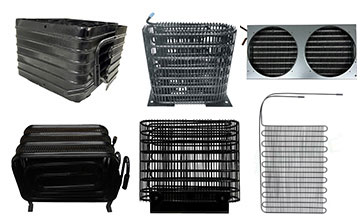
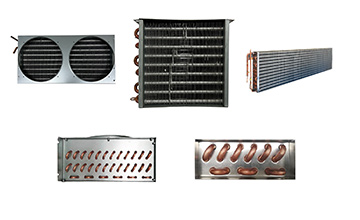
Air-cooled condensers mainly consist of heat dissipation fins, heat exchange coils, axial fans, fixed brackets, and electrical wiring components. They use fans to drive air through the fins and coils, carrying away heat from the working fluid. Requiring no cooling water system, they feature a simple structure and easy installation, and are widely used in small and medium-sized central air conditioning systems, commercial refrigeration equipment, and split refrigeration units.
Their main operational drawback is that the heat dissipation surface is exposed to the external environment, making it highly prone to attracting dust, catkins, insects, and fibrous debris from the air. Long-term accumulation clogs fin gaps, obstructs air convection, and drastically reduces heat dissipation efficiency. Meanwhile, long-term high-speed fan operation often leads to bearing wear, belt aging, and blade imbalance from dust buildup. Electrical components are also susceptible to oxidation and loosening from moisture and dust. Therefore, the core maintenance priorities for air-cooled condensers are fin cleaning, fan maintenance, electrical inspection, and ventilation assurance.
2.2 Water-Cooled Condensers
Water-cooled condensers typically feature shell-and-tube or double-pipe construction, consisting of heat exchange copper tubes, a shell, cooling water inlet/outlet piping, water distributors, pressure gauges, and valve assemblies. Cooling water circulates through the heat exchange tubes, completing heat transfer with the high-temperature gaseous fluid inside the tubes. Offering high heat exchange efficiency and stable operation, they are mostly used in high-power equipment such as large industrial refrigeration units, central air conditioning mainframes, and chemical cooling systems.
These devices rely entirely on cooling water circulation, inherently carrying risks of scaling and corrosion. Calcium and magnesium ions in tap water continuously precipitate under high-temperature heat exchange conditions, adhering to the inner pipe walls to form hard scale. Meanwhile, sediment and impurities in the water deposit as sludge, which not only reduces pipe cross-sectional area, increases flow resistance, and lowers heat exchange efficiency, but also causes local overheating and pressure imbalance. Long-term accumulation leads to pipe corrosion and perforation leaks. In addition, substandard cooling water quality and aging pipeline seals can also cause leakage and blockage failures. Therefore, the core maintenance priorities for water-cooled condensers are water quality control, pipeline descaling, sludge removal, seal inspection, and pressure verification.
2.3 Evaporative Condensers
Evaporative condensers are integrated high-efficiency heat exchange devices that combine three principles: air cooling, water cooling, and evaporative cooling. They consist of heat exchange coils, a spray system, drift eliminators, a water collection sump, circulating pumps, fans, and a cabinet. They achieve fluid condensation through the dual effects of spray water evaporation (which absorbs heat) and fan convection heat dissipation. Combining high heat exchange efficiency, low energy consumption, and a small footprint, they are widely used in large industrial refrigeration, cold storage, and chemical condensation systems.
Their complex structure and numerous auxiliary components result in relatively scattered failure points. During operation, common issues include clogged spray nozzles, scale on coil surfaces, scale buildup on drift eliminators, sludge growth in the sump, pump failures, and excessive fan vibration. Additionally, the humid, enclosed environment fosters algae and microbial growth, accelerating equipment corrosion and pipeline blockage. Therefore, the core maintenance priorities for evaporative condensers are spray system unclogging, drift eliminator maintenance, sump cleaning, microbial control, and overall vibration and corrosion protection.
3. Daily Basic Maintenance of Condensers (Daily/Weekly Routine Tasks)
Daily basic maintenance is the foundation for long-term stable condenser operation. Its core purpose is to promptly identify minor hidden dangers, remove surface debris, and ensure basic equipment operating conditions, preventing small problems from escalating into major failures. It should be integrated into daily equipment inspections and weekly routine work processes, following the principle of "early detection, prompt resolution, and zero-hazard operation."
3.1 Visual and Data Inspection of Operating Status
During daily equipment operation, maintenance personnel must conduct regular comprehensive inspections of the condenser, focusing on operating parameters and appearance, and keeping records of data and abnormal conditions. First, verify core parameters such as operating pressure, inlet/outlet fluid temperatures, and cooling medium flow rate. Compare these with rated parameters and historical operating data; if there is high pressure, abnormal temperature differences, or flow fluctuations, immediately investigate the cause and prevent operation outside design parameters. Second, observe the overall operating condition of the equipment, checking for physical deformation, pipeline leaks, weld cracks, bent fins, or cabinet damage. Third, listen to equipment operating sounds. A normally operating condenser has smooth, noise-free fan and pump operation. Metallic grinding sounds, unusual noises, knocking, or abnormal vibration likely indicate bearing wear, blade deformation, loose foundation bolts, or pipeline resonance, requiring immediate shutdown for inspection.
A comprehensive data review should be completed weekly, compiling equipment energy consumption, operating load, and parameter fluctuations. Combined with ambient temperature and operating condition changes, analyze trends in heat exchange efficiency, predict potential failures in advance, and provide data support for in-depth maintenance.
3.2 External Environment and Ventilation Condition Improvement
Condenser heat exchange efficiency is closely related to the surrounding environment and ventilation conditions. Daily efforts must continuously ensure compliance of the equipment operating environment. First, clear obstructions around condenser air inlets/outlets and heat dissipation surfaces, preventing debris, materials, or barriers from blocking air ducts. For air-cooled and evaporative condensers, maintain a minimum clearance of 1.5 meters around the unit to ensure unobstructed air convection. Second, during seasons with high catkin and dust levels (spring and summer), clean floating debris and surface dust from the equipment daily to prevent clogging of fins and air ducts. Do not wipe dry floating dust with a damp cloth, as this can cause debris to clump and penetrate deep into fin gaps, causing deep blockages. Finally, keep the area around the equipment dry and clean, avoiding standing water, oil, and debris accumulation, which can accelerate oxidation of electrical components and corrosion of metal parts in humid environments.
3.3 Basic Cleaning and Component Inspection
A basic surface cleaning and component inspection should be completed weekly. For air-cooled condensers, use a soft brush to clean surface dust and debris along the direction of the fins. Use a specialized fin comb to straighten slightly bent fins, ensuring neat fins with uniform gaps. Inspect fan blade integrity and remove accumulated dust from blades to prevent imbalance and excessive vibration. For water-cooled condensers, check the condition of cooling water inlet/outlet valves, confirming smooth operation and no leaks. Observe cooling water clarity; if the water is turbid or contains excessive impurities, promptly inspect the water treatment system. For evaporative condensers, remove floating debris from the surface of the water collection sump and check spray output, confirming no clogged nozzles, even water distribution, and no partial flow or cutoffs.
At the same time, inspect equipment foundation bolts, fixed brackets, and vibration dampers weekly, confirming tight bolts, undeformed brackets, and functional vibration dampers to prevent excessive vibration-induced fatigue damage. Check equipment sealing points, ensuring no water, oil, or gas leaks at pipe joints, flanges, and end cover gaskets. Address minor leaks by tightening connections promptly.
3.4 Basic Electrical System Maintenance
The electrical system is the core guarantee for stable condenser operation, and basic protection and inspection must be performed daily. Weekly inspect fan and pump motor terminals, confirming no looseness, oxidation, discoloration, dust, or oil buildup, and ensuring secure, neat wiring. Check that power and control cable insulation is intact, with no damage, aging, or wear, eliminating electric shock and short circuit hazards. Clean dust from electrical enclosures and motor surfaces to keep electrical components dry and clean, preventing electrical failures from moisture and dust. Increase inspection frequency during rainy seasons and high-humidity environments, focusing on electrical moisture protection to prevent condensation damage to components.
4. Periodic In-Depth Maintenance of Condensers (Monthly/Quarterly/Annual Standardized Tasks)
Daily basic maintenance only addresses surface-level and minor issues, and cannot remove internal scale, deep-seated dust, or aging-related hazards. It is necessary to develop monthly, quarterly, and annual in-depth maintenance plans based on equipment operating conditions and environmental factors. These plans include systematic cleaning, component maintenance, performance verification, and hazard remediation to fully restore condenser heat exchange performance and operating condition.
4.1 Monthly Specialized Maintenance Tasks
Monthly maintenance focuses on refined upkeep of functional components and parameter calibration, addressing hidden issues difficult to detect in daily inspections. First, perform deep dust removal: for air-cooled condensers, use low-pressure air to blow deep-seated dust from fins, following the direction of air flow to thoroughly clear residual debris from fin gaps. For evaporative condensers, clean fan impellers and internal cabinet dust to ensure rated air volume. Second, verify operating parameters: test core parameters such as condenser inlet/outlet water pressure difference, fluid temperature difference, fan speed, and pump flow rate. Compare against rated standards; if pressure difference rises abnormally or temperature difference is excessive, anticipate pipeline blockage or heat transfer degradation and intervene early. Third, maintain moving parts: apply specialized grease to fan bearings and pump shafts, inspect belt drive systems, and adjust belt tension. The standard is a belt deflection of ≤10mm when pressed. Replace aged, cracked, or deformed belts promptly to avoid slipping and power loss. Fourth, inspect the drainage system: clean condensate drain lines and water collectors to ensure unobstructed drainage and no standing water, preventing bacterial growth and equipment corrosion.
4.2 Quarterly Deep Cleaning and System Maintenance
Quarterly maintenance focuses on deep equipment cleaning, water treatment, and component performance testing, and is a key link in ensuring condenser heat exchange efficiency. Targeted specialized tasks are performed for different equipment types.
For air-cooled condensers, quarterly maintenance requires a full deep clean. After shutting off main power, rinse the heat dissipation surface from top to bottom with low-pressure clean water (below 0.3 MPa) along the fin direction, thoroughly removing dust, oil, and stubborn debris from fin gaps. Never use high-pressure water to rinse against the fin direction, as this can bend fins and damage the heat exchange structure. Allow to air dry naturally, then inspect fin flatness and duct patency, confirming no blockages or deformation. At the same time, comprehensively test fan operating condition, including start/stop sensitivity, operating noise, and vibration levels. Align fan horizontal alignment and investigate abnormal motor temperature rise.
For water-cooled condensers, quarterly maintenance focuses on water quality control and pipeline pre-treatment. Test cooling water indicators such as pH, hardness, and turbidity. If water quality is substandard, replace cooling water promptly and add corrosion inhibitors and scale inhibitors to suppress calcium/magnesium ion precipitation and pipeline scaling. Clean cooling water filters and strainers to ensure unobstructed water flow. Test pipeline sealing performance, pre-treat loose or aged gaskets, and identify micro-leak hazards. Meanwhile, monitor pipeline inlet/outlet pressure difference; if the pressure difference increases by more than 15% from initial operating values, pipeline scaling and blockage have occurred, and deep descaling should be scheduled in advance.
For evaporative condensers, quarterly maintenance requires comprehensive upkeep of the spray and drift elimination systems. Inspect all spray nozzles one by one, unclog blocked nozzles, and clean debris from spray lines to ensure uniform spray volume and full coverage of heat exchange coils. Disassemble and clean drift eliminator surfaces, removing scale buildup. Test drift rate, with a standard of less than 0.001% of circulating water collected at the air outlet over 30 minutes, to avoid water loss and equipment corrosion from entrainment. Thoroughly clean sludge, algae, and microbial fouling from the bottom of the water sump. Clean the water level float valve and test its opening/closing sensitivity to ensure accurate automatic water level control, with automatic shutoff at the overflow point and no overflow or water shortage issues.
4.3 Annual Overhaul and Performance Calibration
Annual overhaul is the most comprehensive and in-depth maintenance procedure for condensers each year, covering full disassembly inspection, deep descaling, component replacement, electrical testing, performance calibration, and corrosion protection. It must be completed intensively during equipment shutdown windows to fully eliminate aging, wear, and scaling hazards, and restore rated equipment performance.
First, perform full deep descaling and cleaning. For water-cooled and evaporative condensers, use a dual process of "physical cleaning + chemical cleaning" to descale pipes and coils. Physical cleaning uses high-pressure water jets and tube pigs to remove loose scale, sludge, and impurities from inner pipe walls. Chemical cleaning strictly follows standardized procedures: first isolate the equipment system, close all valves, set up circulating cleaning lines, add specialized corrosion inhibitors to protect metal pipe walls, then mix appropriate descaling chemicals for 24 hours of circulating acid cleaning to thoroughly remove hard scale. After acid cleaning, repeatedly flush pipes with clean water until no chemical residue remains and water runs clear. Finally, perform passivation treatment to inhibit secondary scaling and corrosion. After cleaning, visually inspect pipe walls to ensure they show bare metal with no residual scale, sludge, or debris.
Second, conduct a comprehensive overhaul of core components. Disassemble and inspect moving parts such as fans, pump bearings, impellers, and shafts; replace excessively worn, deformed, or aged parts directly. Inspect integrity of heat exchange coils, shells, and piping, identifying corrosion, pitting, and thinning hazards. Apply anti-corrosion treatment to lightly corroded areas, and promptly repair or replace damaged leaking sections. Fully replace aged gaskets, seals, and damping components to eliminate leakage and vibration failures.
Third, perform professional electrical system testing. Annually test equipment insulation resistance, with a standard value of ≥2 MΩ. If values fall below standard, investigate and remedy line aging, moisture, or damage. Polish oxidized terminals, apply conductive grease to enhance connection stability, and tighten all wiring points. Inspect operating condition of electrical components such as contactors, relays, and sensors. Calibrate temperature and pressure sensor accuracy to ensure precise parameter collection and responsive equipment control.
Fourth, perform overall corrosion protection and performance commissioning. Clean rusted and chipped paint areas on the equipment body, sand off rust, and apply specialized anti-corrosive paint and rust-resistant coatings to improve corrosion resistance. After reassembly, run the equipment under no-load conditions, gradually debug operating parameters, and calibrate core indicators such as heat exchange efficiency, pressure, flow rate, and speed. Ensure the equipment meets rated operating standards, with smooth operation, no abnormal noise, no excessive vibration, and no leakage failures.
5. Specialized Maintenance Techniques for Core Condenser Components
The operating condition of various core condenser components directly determines overall equipment performance. Targeted refined maintenance for wear-prone and high-failure components can effectively reduce equipment failure rates, extend component service life, and improve operational stability.
5.1 Fan System Maintenance
Fans are the core heat dissipation components of air-cooled and evaporative condensers. Long-term high-speed operation often leads to dust-induced imbalance, bearing wear, belt aging, and excessive vibration. During maintenance, regularly clean dust from fan blades, impellers, and housings to maintain blade weight balance and prevent resonance and excessive vibration at high speeds. Apply high-temperature lithium-based grease to fan bearings every six months to prevent noise, jamming, and burnout from dry operation. Regularly check belt tension and wear condition, replacing aged, cracked, or slack belts promptly to maintain stable transmission efficiency. Tighten fan mounting bolts, inspect fan brackets and vibration dampers, and adjust fan horizontal alignment to keep operating vibration within standard limits. During test runs, monitor fan speed, noise, and temperature rise; shut down immediately for inspection if speed is unstable, noise is abnormal, or the motor overheats.
5.2 Heat Exchange Pipes and Fins Maintenance
Heat exchange coils and cooling fins are the heat exchange core of condensers, and their cleanliness and integrity directly determine heat exchange efficiency. Air-cooled fins must be kept flat and unobstructed; bent fins should be straightened promptly. Avoid impact or compression with hard objects that cause fin deformation and blockage. Regularly clean oil and dust from fins to prevent impurities from forming an insulating layer that impedes heat transfer. For water-cooled heat exchange copper tubes, focus on scaling and corrosion prevention. Maintain clean inner pipe walls through water softening, regular scale inhibition, and periodic descaling. Never clean copper tubes with strong acids or alkalis, as this can corrode pipe walls and cause leaks. Regularly test pipe wall thickness to identify local corrosion and perforation hazards. For evaporative coils, ensure full spray coverage with no dry areas that accumulate scale. Regularly remove scale and oxide layers from coil surfaces to maintain optimal heat transfer contact area.
5.3 Spray and Water Circulation System Maintenance
Water circulation and spray systems are core auxiliary heat exchange systems for water-cooled and evaporative condensers, prone to blockage, standing water, and water quality deterioration. Daily, regularly clean circulating water filters and strainers to trap sediment and impurities, preventing them from entering pipes and nozzles and causing blockages. Monthly inspect spray line tightness and patency, unclog blocked nozzles, and adjust spray angles to ensure uniform, full-coverage spray. Quarterly replace circulating water, clean sludge and algae from sumps and tanks, and add bactericidal and algaecidal agents to prevent microbial growth that corrodes pipes and clogs heat exchange surfaces. Inspect circulating pump operating condition, maintain pump bearings and seals, and troubleshoot issues such as leaks, insufficient pressure, and unstable flow to ensure adequate water circulation power and stable flow.
5.4 Valve and Instrument System Maintenance
Condenser valves, pressure gauges, thermometers, and sensors are core components for equipment parameter regulation and monitoring. Weekly check valve operability, manually testing control valves, shutoff valves, and safety valves to ensure smooth operation, tight sealing, no jamming, and no leakage. Monthly calibrate pressure gauge and thermometer accuracy, replacing those with excessive deviation promptly. Quarterly clean sensor probes of dust and scale to ensure accurate parameter collection. Annually disassemble and inspect safety valve and pressure relief valve performance, calibrating pressure relief thresholds to ensure automatic pressure relief during overpressure conditions and eliminate high-pressure safety hazards. Regularly apply grease to all valve moving parts to prevent rust and jamming, ensuring responsive and reliable regulation.
6. Common Condenser Troubleshooting and Maintenance Remediation Solutions
Most condenser operating failures can be prevented in advance or quickly remediated through targeted maintenance. Combining common equipment failure symptoms, this section outlines failure causes, inspection methods, and maintenance measures to achieve closed-loop failure handling and improve equipment operation and maintenance efficiency.
6.1 Decreased Heat Exchange Efficiency and High-Pressure Alarms
Symptoms: Frequent high-pressure alarms during operation, degraded unit refrigeration/condensation effect, significantly increased energy consumption, and insufficient fluid condensation.
Primary causes: For air-cooled types – dust-clogged fins, blocked air ducts, and insufficient fan airflow. For water-cooled types – pipeline scale buildup, poor water flow, and high cooling water temperature. For evaporative types – clogged nozzles, uneven spray, coil scaling, and fan failure.
Maintenance and remediation: Immediately clean equipment heat dissipation surfaces and air duct debris, unclogging blocked sections. Clean scale and dust from heat exchange surfaces to restore heat transfer performance. Inspect fan and pump operating condition, adjust belt tension, replenish grease, and replace faulty components. Optimize cooling water quality, replace high-temperature circulating water, and add scale-inhibiting chemicals. After remediation, test-run the equipment and calibrate operating pressure and heat exchange parameters to confirm fault elimination. In daily operation, shorten cleaning cycles and strengthen ventilation and water quality control to prevent recurrence.
6.2 Abnormal Operating Noise and Excessive Vibration
Symptoms: Metallic grinding sounds, knocking, humming, or other unusual noises during operation, severe body vibration, and noticeable resonance in foundations and piping.
Primary causes: Fan bearing wear from insufficient lubrication, blade imbalance from dust buildup, and loose/slipping belts. Loose equipment foundation bolts and aged/failed vibration dampers. Loose pipeline supports and shifted heat exchange components. Pump impeller wear and internal debris jamming.
Maintenance and remediation: After shutdown, comprehensively inspect moving parts, apply grease to bearings, and directly replace severely worn bearings and impellers. Clean dust from fan blades and correct blade balance. Tighten all foundation bolts and pipeline support brackets, replace aged vibration dampers, and adjust equipment horizontal alignment. Clean debris from pump interiors and inspect pump operating condition. Test-run the equipment, monitoring vibration and noise levels until they return to standard. In daily operation, regularly maintain moving parts and tighten fixing points for常态化 prevention.
6.3 Pipeline and Joint Leaks
Symptoms: Water seepage, dripping, or flowing at pipe joints, flanges, end covers, and pump seals, with significant equipment water accumulation.
Primary causes: Aged, deformed, or damaged gaskets and seals. Loose bolts with uneven stress. Corroded/perforated pipes and cracked welds. Worn-out pump mechanical seals. Water-induced corrosion accelerating component aging.
Maintenance and remediation: For minor leaks, tighten connecting bolts with uniform torque. Fully replace aged and damaged gaskets and seals, re-establishing proper sealing. Promptly repair corroded, cracked pipes and welds; directly replace severely damaged piping. Replace failed pump mechanical seals. Clean accumulated water areas and apply anti-corrosion treatment. In daily operation, regularly inspect sealing component condition, control circulating water quality to reduce corrosion risks, and periodically replace aging seals.
6.4 Water Entrainment and Algae Growth in Evaporative Condensers
Symptoms: Severe water carryover from equipment air outlets, turbid standing water in the sump, green algae growth, unpleasant odors, and accelerated equipment corrosion.
Primary causes: Scaled/clogged or deformed/failed drift eliminators. Excessive spray volume and misaligned nozzle angles. Infrequent sump cleaning and deteriorated water quality. Microbial growth in long-term humid, enclosed environments.
Maintenance and remediation: Disassemble and clean scale from drift eliminators, correct deformed components, and promptly replace those exceeding failure limits. Adjust spray pressure and nozzle angles, controlling spray volume to eliminate excessive water entrainment. Thoroughly clean sump sludge and algae, replace with fresh circulating water, and add specialized algaecide and bactericide. Unclog drainage lines to ensure prompt removal of standing water with no residual accumulation. In daily operation, clean sump debris weekly, perform water bactericidal treatment monthly, and conduct deep cleaning of the drift elimination system quarterly.
7. Seasonal Specialized Maintenance Specifications for Condensers
Ambient temperature, humidity, and operating conditions vary significantly across seasons, resulting in different condenser operating loads and failure causes. Targeted seasonal specialized maintenance is required to adapt to environmental changes and ensure stable year-round equipment operation.
7.1 Summer High-Temperature Specialized Maintenance
Summer brings high ambient temperatures and heavy equipment loads, making it a peak period for condenser failures. Core maintenance priorities are enhancing heat dissipation and preventing high-temperature overload. First, increase cleaning frequency: clean air-cooled fins, spray systems, and air duct debris every two weeks to prevent high-temperature high-pressure failures from散热 blockage. Second, control cooling water temperature, avoiding prolonged high-temperature operation of circulating water; add cooling measures if necessary to reduce heat transfer temperature difference stress. Third, focus on monitoring fan and pump motor temperature rise – motors are prone to overheating and overload in high-temperature environments. Regularly inspect motor heat dissipation and clean motor dust to ensure unobstructed cooling. Fourth, comprehensively inspect the electrical system: high temperatures accelerate line aging and terminal oxidation. Tighten wiring points and inspect line hazards to prevent electrical failures. Fifth, strictly control equipment operating load, avoiding prolonged full-load or overload operation, and adjust operating conditions as needed to reduce equipment wear.
7.2 Winter Freeze Protection Specialized Maintenance
Winter brings low temperatures, and pipes and sumps in water-cooled and evaporative condensers are highly prone to freezing, which can burst pipes and damage components. Core maintenance priorities are freeze protection, drainage, and insulation. First, for short-term shutdowns, keep equipment running at low speed to maintain fluid flow in pipes and prevent freezing. Second, for long-term shutdowns, completely drain all residual fluid from condenser heat exchange tubes, circulating lines, sumps, and pumps to prevent frozen water from expanding and bursting pipes. Third, install insulation cotton and freeze-protection sleeves on exposed outdoor pipes, valves, and instruments for thermal protection. Fourth, close outdoor equipment air vents to prevent cold wind from blowing directly on equipment and causing localized low-temperature freezing. Fifth, before winter startup, inspect pipeline integrity and valve flexibility in advance, and pre-warm the equipment before starting operation to prevent damage from low-temperature startup.
7.3 Spring and Autumn Transition Season Maintenance
Spring brings high levels of catkins and dust, so focus on equipment dust and blockage protection. Increase surface cleaning frequency, promptly removing catkins and floating debris to avoid clogging fins, nozzles, and air ducts. Comprehensively inspect component wear after winter operation, tighten loose parts, replenish grease, and remediate minor hazards. In autumn, as temperatures drop and operating conditions shift, focus on completing deep equipment cleaning, removing oil, scale, and impurities accumulated during summer high-temperature operation. Test overall equipment performance, calibrate operating parameters, replace slightly worn aging components, perform pre-winter freeze protection preparations, and inspect insulation and drainage system hazards to lay the groundwork for stable winter operation.
8. Specialized Maintenance Specifications During Equipment Shutdown Periods
Maintenance requirements differ for short-term shutdowns, long-term shutdowns, and seasonal shutdowns of condensers. Standardized shutdown maintenance can effectively prevent corrosion, aging, and damage during idle periods, ensuring equipment can be put back into normal operation upon restart.
8.1 Short-Term Shutdown Maintenance (1–7 Days)
Short-term shutdowns do not require equipment disassembly, focusing on dust, moisture, and loosening protection. After shutdown, turn off equipment power and water valves, clean surface debris and dust, and keep the equipment clean and dry. Inspect pipelines for standing water and leaks, and confirm sealing components are intact. Lightly tighten loose bolts and terminals. Keep indoor equipment ventilated and dry; provide dust covers for outdoor equipment to prevent rain and dust from entering the interior. No fluid drainage is required, and routine daily inspections are sufficient.
8.2 Long-Term Shutdown Maintenance (Over 7 Days)
Long-term shutdowns require systematic mothballing maintenance to prevent idle deterioration. First, completely drain all cooling water and residual fluid from inside the equipment to prevent fluid residue from corroding pipes and fostering microbial growth. Second, perform full equipment cleaning, removing all scale, dust, oil, algae, and other impurities to keep the equipment in a clean state. Then apply grease to moving parts and valve operating points to prevent rust and jamming. Apply moisture and dust protection to electrical components, disconnect main power, and wrap terminals, motors, and control boxes. Finally, seal equipment air inlets/outlets and pipe ports, providing full dust, rain, and sun protection; cover outdoor equipment with protective tarps. Conduct monthly inspections during shutdown to check for corrosion, moisture, and damage, addressing hazards promptly.
8.3 Restart Maintenance After Prolonged Shutdown
After prolonged shutdown, never start the equipment directly; a comprehensive pre-start inspection and preparation must be completed. Step 1: Inspect equipment appearance, piping, and component integrity, confirming no damage, corrosion, or deformation. Step 2: Inspect electrical wiring, terminals, and insulation performance, confirming electrical system safety and compliance. Step 3: Remove sealing and protective covers, and clear air ducts, pipes, and nozzles to ensure unobstructed flow. Step 4: Add fluid, adjust valves, and calibrate operating parameters. Step 5: Run the equipment under no-load conditions, monitoring operating sound, vibration, pressure, temperature, and other parameters. Confirm smooth operation and normal parameters before gradually loading into normal operation.
9. Condenser Maintenance Safety Standards and Long-Term Management System
9.1 Maintenance Operation Safety Standards
Condenser maintenance must strictly follow safety operating procedures to prevent safety accidents. All cleaning, overhaul, and maintenance work must be performed under complete power-off, depressurized shutdown, and drained fluid conditions. Strictly implement the lockout/tagout procedure; live or pressurized operation is strictly prohibited. For high-altitude work and equipment disassembly, provide proper safety protection, wear protective equipment, and erect safety barriers. For chemical cleaning operations, wear corrosion-resistant protective equipment, strictly follow chemical mixing ratios, and standardize chemical storage and waste disposal to avoid chemical corrosion and poisoning hazards. For high-pressure cleaning operations, control water pressure standards; never direct high-pressure water streams at electrical components or sealing parts. After completing work, inventory tools and clean the work site, confirming no tools or debris left inside the equipment, before restoring operation.
9.2 Long-Term Maintenance Management System
Establishing a standardized, routine maintenance management system is the core of ensuring long-term stable condenser operation. First, establish equipment ledgers recording model numbers, installation dates, operating parameters, maintenance records, failure history, and component replacement records to achieve full lifecycle traceability. Second, develop tiered maintenance plans that define daily, weekly, monthly, quarterly, and annual maintenance tasks, work standards, responsible personnel, and completion deadlines based on equipment type, operating conditions, and environmental factors. Third, implement maintenance assessment systems, standardize work processes, enforce strict acceptance criteria, and eliminate perfunctory work, missed maintenance, and inadequate upkeep. Fourth, regularly conduct equipment condition assessments, analyzing equipment wear patterns based on operating data, maintenance records, and failure history to optimize maintenance cycles and work content for precision maintenance. Fifth, strengthen professional training for operation and maintenance personnel, building proficiency in equipment structure, maintenance procedures, troubleshooting, and safety standards to improve standardized work capabilities.
The operating condition of condensers directly affects the efficiency, energy consumption, and service life of entire thermal and refrigeration systems. Scientific and standardized maintenance is the core means of reducing equipment failure rates, saving operational costs, improving stability, and extending service life. Condenser maintenance is not a single cleaning task, but a systematic effort encompassing daily inspection, periodic upkeep, specialized component maintenance, closed-loop failure remediation, seasonal protection, shutdown maintenance, and safety control.
In actual equipment operation and maintenance, it is necessary to abandon the traditional mindset of "prioritizing repairs over preventive maintenance." Based on the structural characteristics and operating differences of air-cooled, water-cooled, and evaporative condensers, implement tiered maintenance systems with targeted measures, refining every work procedure and technical standard to prevent scaling, blockage, corrosion, wear, electrical aging, and other hazards at the source. Through routine, standardized, and refined maintenance management, continuously maintain optimal condenser heat exchange performance, reduce operating energy consumption and downtime losses, and ensure sustained, stable, and efficient operation of various industrial, commercial, and refrigeration systems, providing a solid foundation for safe and economical equipment operation.
.jpg)


Subscribe for more updates
Get instant updates about our new products and special promos!
