- Condenser
- Refrigerator Evaporator
-
Compressors
Refrigerator Compressors Shop all
-
Motors and Fans
Motors and Fans Shop all
-
Refrigerator Accessories
Refrigerator Accessories Shop all
-
Air Conditioner Accessories
Air Conditioner Accessories Shop all
- Refrigerants
-
Repair Tools
Repair Tools Shop all
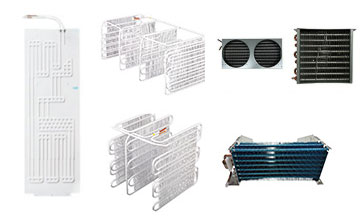
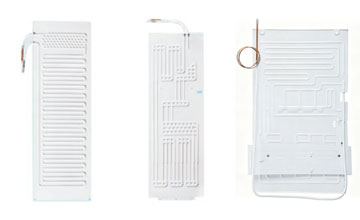
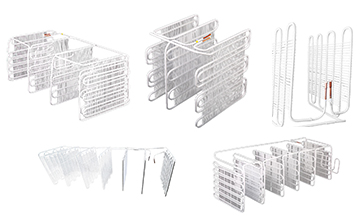
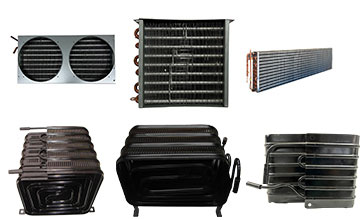
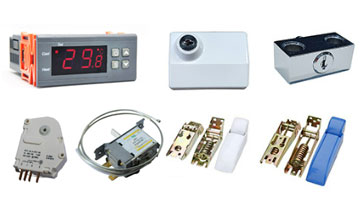
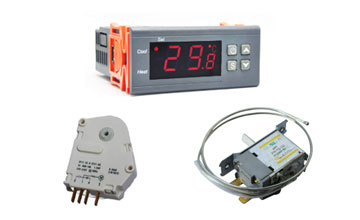
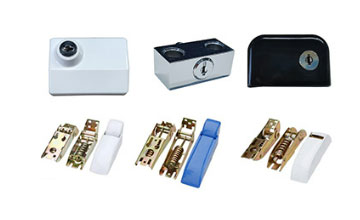
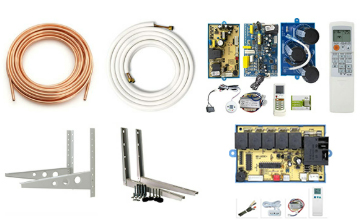
Factory or Service Provider for Custom Display Cabinet & Aircon Parts?
Sep 03,2026 - 10:16 Reading:140
In the commercial refrigeration and air conditioning supporting industry, nearly every procurement manager faces the same dilemma. For custom display cabinet and air conditioning components, should you work directly with an original manufacturer or engage a professional supply chain service provider?
Most people’s first instinct is to go straight to the factory.
“Cut out middlemen for lower factory-direct pricing, take direct control over production, and gain greater oversight of custom work.” This belief has prevailed for years and become a default mindset for many buyers. Yet countless businesses run into problems during actual project execution: repeated revisions in drawing communication, coordination with five or six separate factories for different component types, excess inventory caused by high minimum order quantities, inconsistent quality between samples and mass-produced goods, and finger-pointing among manufacturers when defects arise. These issues lead to project delays and stalled finished-unit delivery. The hidden costs often far outweigh the small savings on unit prices. Without in-house expertise, partnering with a service provider delivers clear advantages.
It is important to understand that refrigerated display cabinet components are not standard screws. The range includes door gaskets, glass doors, sheet metal housings, PCBA control boards, cooling fans, pipeline assemblies, and narrow-frame glass door assemblies specially made for commercial refrigerators. These parts span multiple manufacturing disciplines: injection molding, sheet metal fabrication, electronics and glass processing. Few single factories can independently develop and produce the full spectrum of required custom parts. Service providers excel at full-category component integration, technical coordination and project management. They deliver complete, practical custom component solutions to help clients achieve more with less effort.
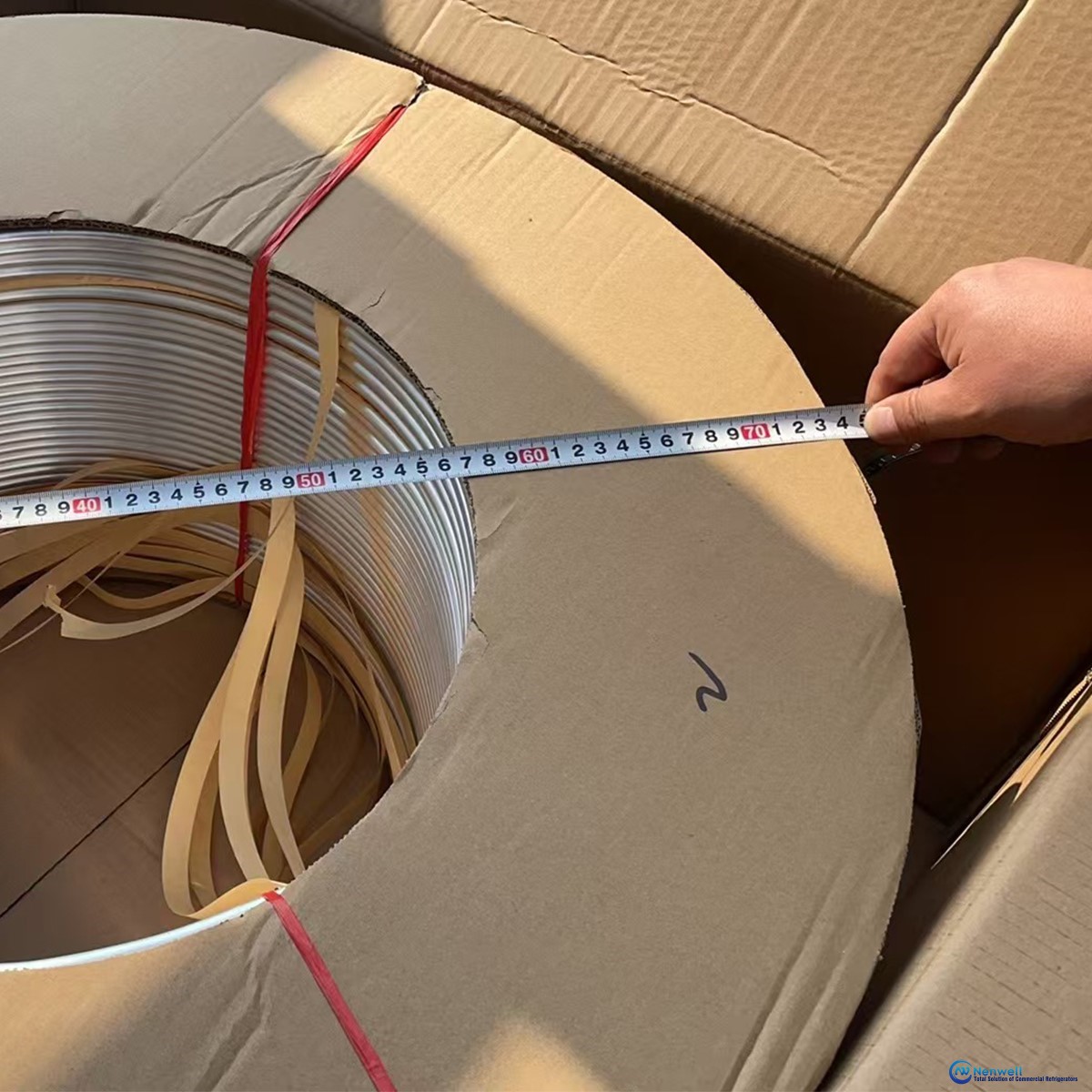
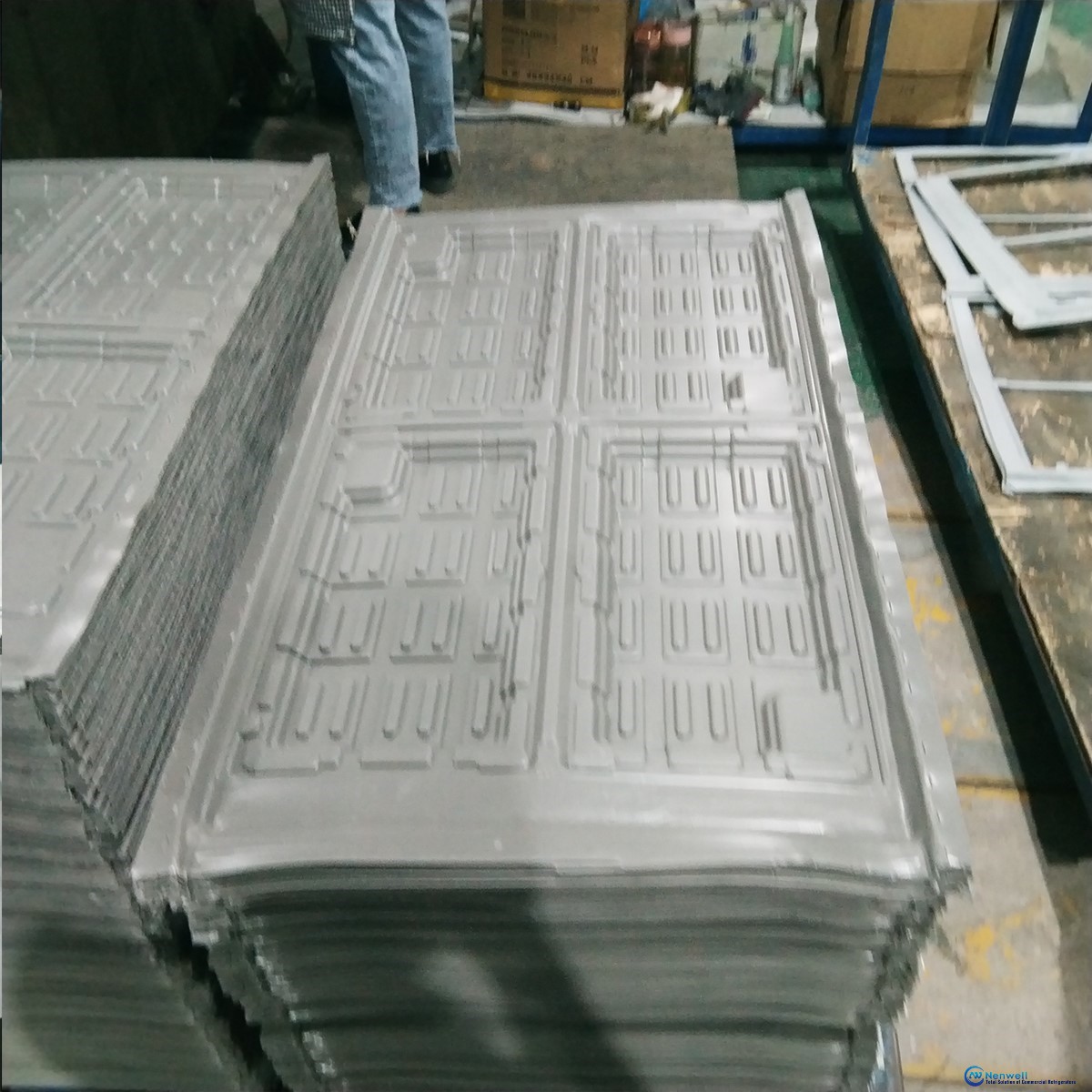
I. Custom Component Fabrication Is Far More Complex Than Ordinary Customization
Custom component development must align with actual equipment conditions. As a composite parts development project, it has three core characteristics.
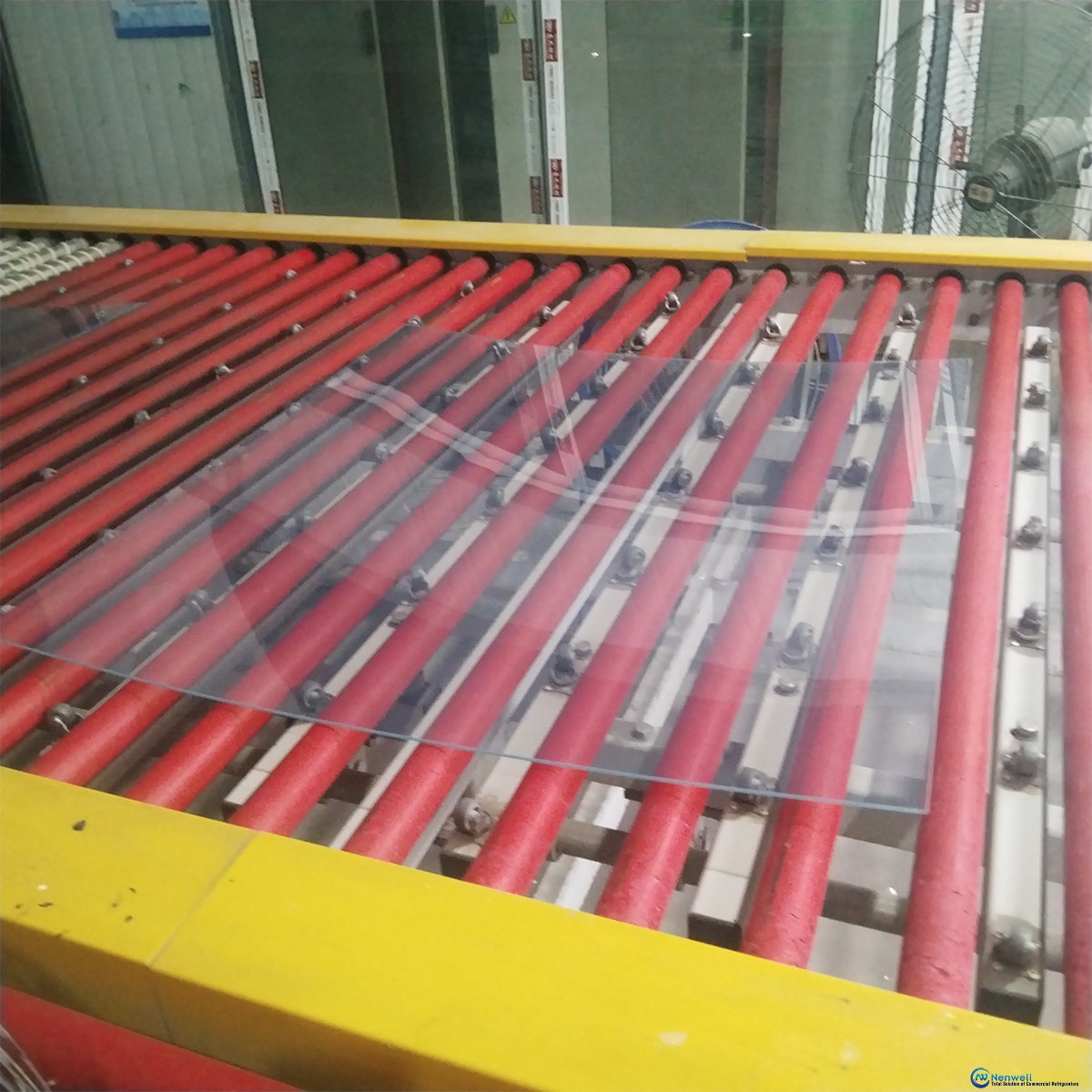
First, components are diverse and rely on incompatible manufacturing processes. Some parts require mold opening. For example, a beverage display cabinet incorporates glass door assemblies, injection-molded door frames, sheet metal back panels, wiring harnesses, temperature control mainboards, door gaskets, fans and filters. Glass manufacturers specialize only in glasswork; injection molding factories produce only plastic parts; sheet metal workshops do not manufacture circuit boards. No single factory masters production for all these components. Sourcing directly from manufacturers means your procurement team must liaise with 5 to 8 independent production enterprises.
Second, custom requirements are stringent, and component compatibility is the top priority. These parts are not used in isolation; they are assembled inside finished equipment. Each individual part may meet dimensional specifications on its own, yet parts made by separate factories may fail to fit together, resulting in tolerance mismatches and assembly interference that prevent final unit assembly. This is a commonly overlooked risk.
Third, compliance requirements are demanding. Products sold in China require CCC safety certification, while European and American markets mandate CE, RoHS, UL, DOE and other qualifications. Electrical controls, glass pieces and plastic components each follow distinct testing standards. Most factories can only supply test reports for their individual products and cannot coordinate compliance documentation for the full component set. Missing paperwork during overseas customs clearance can hold entire shipments at ports and trigger heavy losses.
Data from the China Refrigeration and Air-Conditioning Industry Association shows steady growth in the refrigeration supporting market alongside severe supply chain fragmentation. For small and medium finished-equipment manufacturers and overseas buyers undertaking custom component projects, over 60% experience delays. The root cause is insufficient coordination among multiple suppliers, miscommunication over drawings and poor part fit — not limited factory capacity. These are inherent drawbacks of relying solely on direct factory partnerships.
Many procurement professionals mistakenly regard a lower per-unit price as procurement success. Modern supply chain procurement, however, calculates total lifecycle costs instead of standalone factory prices.
II. Sourcing Custom Components Directly from Factories: Visible Low Prices, Hidden Costs and Risks
Admittedly, direct factory sourcing offers advantages for large finished-goods brands placing million-piece bulk orders of a single component. For most distributors, small and medium brands and project-based buyers, coordinating custom refrigerator and air conditioning parts across multiple factories brings multiple intractable challenges.
Issue 1: High Minimum Order Quantity (MOQ) Barriers
Factories operate around mass production. Fixed costs apply to production line mold changes and commissioning, so manufacturers set minimum order quantities such as 100 pieces to reduce per-unit costs. A glass door maker, for instance, may require minimum runs of several hundred custom sets; injection-molded parts often need orders of at least a thousand units after mold development.
Many buyers actually need prototyping for new products, small-batch trial orders and restocking in batches. To secure factory pricing, buyers may be forced to meet MOQs far exceeding current demand. Large volumes of components end up stored in warehouses, tying up working capital and incurring storage fees, degradation losses and even total write-offs for parts stored too long.
We worked with a commercial freezer distributor that sourced glass doors, injection-molded frames and sheet metal parts separately from three factories during new product development. Each factory enforced MOQs, forcing a one-time order of 1,200 component sets. The new product underperformed in the market; only 300 sets were used, leaving 900 sets sitting in storage and locking up nearly 280,000 RMB in capital. After two years in storage, the rubber gaskets degraded and the components had to be scrapped. Although the unit price was cheap, inventory losses erased all profits.Similarly, kitchen equipment guide rails – MOQ 100 pcs.
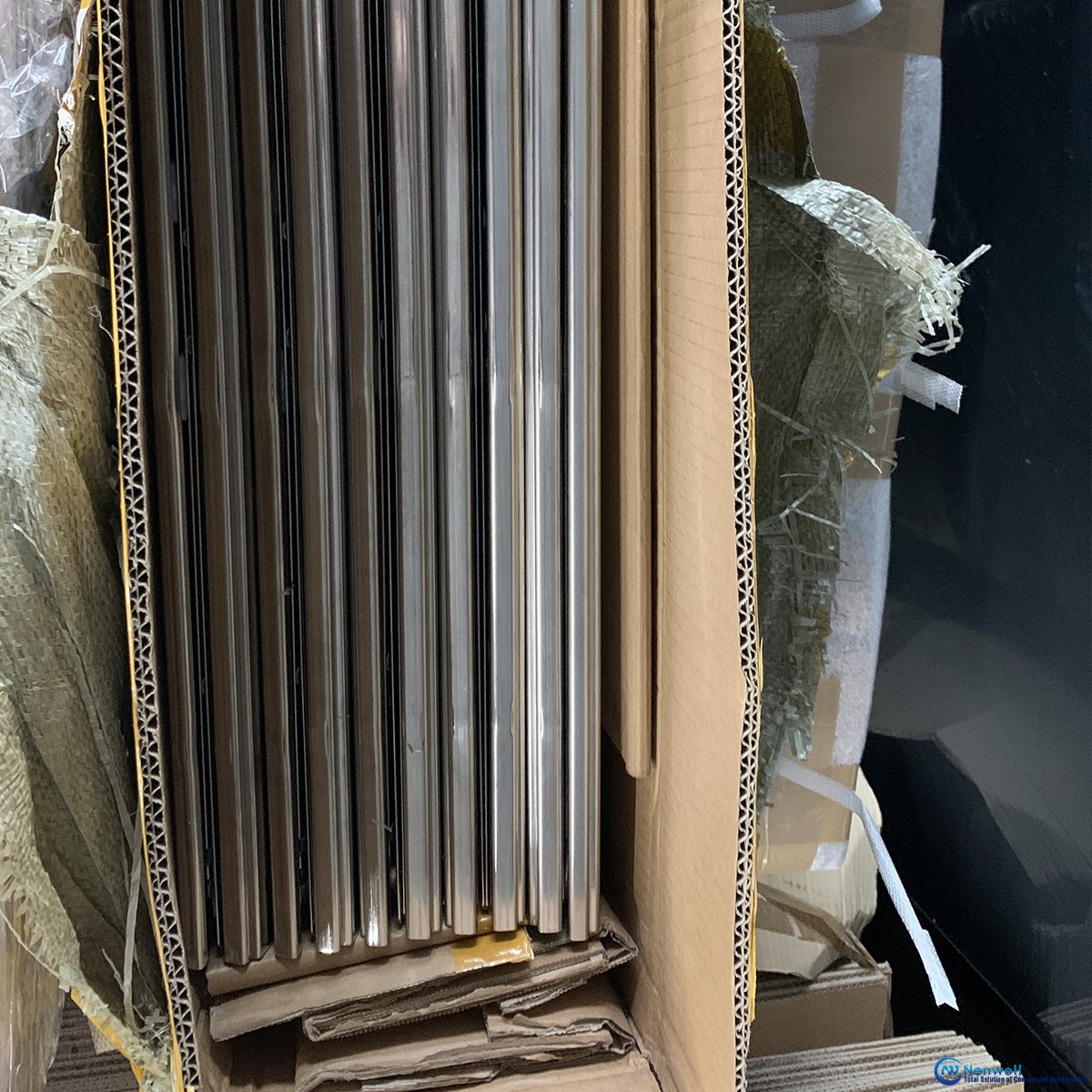
Service providers solve this by consolidating orders from multiple clients and negotiating with upstream manufacturers. They split large runs into smaller batches to lower MOQ requirements and support phased deliveries. Clients avoid bulk stockpiling, order according to actual demand and preserve cash flow.
Issue 2: Exorbitant Coordination and Communication Costs Across Multiple Parties
Working directly with many factories means your procurement team must engage simultaneously with numerous engineers, sales staff and production managers.
Assembly drawings for finished units must be shared with sheet metal, glass, injection molding and electronic control factories. Each manufacturer interprets drawings from its own perspective and produces parts without accounting for fit tolerances with other components. Your procurement team effectively acts as a chief coordinating engineer, repeatedly checking drawings, adjusting tolerances and communicating requirement changes to every factory. Any product structure update or drawing revision must be notified individually to all manufacturers. Missing even one notification can render the whole batch unusable.
Procurement teams are meant to focus on marketing, sales and finished-unit project management, yet much of their time gets consumed in cross-factory coordination. For foreign trade buyers, language barriers and time zones further reduce communication efficiency.
Factories only “produce per drawings” and do not proactively assess DFM (Design for Manufacturability) for the complete component package. They will not flag flawed drawing designs. Problems with assembly only surface after molds are made and samples produced. At that point, mold and sampling costs have already been spent, and the buyer bears all losses.
Issue 3: Fragmented Quality Accountability and Blame-Shifting When Problems Occur
Independent factories take responsibility only for their own individual parts. When assembly reveals fitting issues in the finished unit, it is hard to pinpoint whether the fault lies with excessive sheet metal tolerance, glass dimensional deviation or shrinkage in injection-molded pieces.
Quality disputes typically unfold like this: the sheet metal factory blames inaccurate glass dimensions; the glass factory points to tolerance errors in injection-molded frames, and all parties pass the buck. The buyer must organize testing independently, determine liability and absorb inspection expenses plus production downtime losses. Factories only guarantee that their individual parts meet specs, not that the full set will assemble correctly.
Consider this typical scenario: a custom narrow-frame glass door assembly sourced from three separate suppliers for glass, aluminum frames and door gaskets. Poor sealing causes cold leakage in freezers after assembly. Each supplier provides test reports certifying its individual component is qualified. The buyer must arrange separate testing, consuming extensive time, delaying project delivery and triggering claims from end customers, while none of the factories cover losses from failed unit assembly.
By contrast, the service provider acts as a single accountable party. Clients work with one primary contact, and the service provider oversees all components. Should any part have dimensional, quality or fit issues, the service provider coordinates upstream factories, arranges rework or replacements. Clients are spared the hassle of mediating between multiple vendors. Responsibility is centralized, and risks are fully managed.
Issue 4: Buyers Handle Sampling, Pilot Runs, Certifications, Logistics and Customs Work Independently
Under the direct factory model, manufacturers are solely responsible for production. The buyer’s team must manage sampling, PPAP documentation, batch inspection reports, safety certifications, packaging, consolidated container loading, export logistics and document preparation entirely on their own.
This burden is especially heavy for refrigerator and air conditioning components exported overseas. Full product documentation, test certificates and customs filings must be compiled. When parts come from five factories, five separate sets of reports must be collected and cross-checked for matching model and specification details. Missing documentation can block overseas customs clearance. Many factories lack familiarity with overseas certification standards and can only provide domestic test reports, failing to meet compliance requirements for European and American markets.
Factories focus on manufacturing. They lack dedicated project engineers, quality control teams and documentation specialists to manage the entire supply chain package. Buyers must hire additional technical, QC and documentation staff, pushing up continuous labor costs.
Issue 5: Factories Prioritize Large Clients During Raw Material Price Swings or Capacity Crunches
When raw material prices rise or factory production lines reach full capacity, manufacturers prioritize orders from big clients. Orders from small and medium buyers get rescheduled, and urgent requests are hard to slot in. A factory may quote a three-month lead time for emergency restocking, forcing the buyer’s finished-goods production line to halt.
III. Extra Value Delivered by Service Providers
Many hold the misconception that service providers are merely traders marking up prices. This is not entirely accurate. Fundamentally, a service provider acts as a supply chain project manager for the refrigeration industry. Its core value is not reselling goods, but integrating upstream factory resources with in-house engineering and QC teams. It manages the full project lifecycle: requirement evaluation, drawing optimization, mold coordination, sample development, mass production oversight, quality inspection, compliance documentation and packaging for delivery. The end deliverable is a component kit ready for direct assembly. Reasonable service fees for this work are fully justified.
Value 1: Pre-emptive technical planning, drawing optimization and early detection of design flaws
Qualified service providers employ refrigeration structural engineers. You only need to share finished-unit requirements and assembly targets. The provider carries out DFM manufacturability assessments in advance, optimizes drawings and predicts tolerance matching conflicts across different components, eliminating assembly clashes before molds are fabricated.
For example, suppose a client wants narrow frames for custom beverage display cabinet glass doors. Working directly with glass and aluminum frame manufacturers means the factories will only build according to supplied drawings without evaluating sealing, thermal insulation or door assembly gaps. The service provider’s engineers assess door frame structures and unify tolerance standards for upstream suppliers, preventing cold leakage and excessive door gaps after assembly.
Many clients only have conceptual drawings. Service providers help refine drawings, split parts and standardize tolerances, reducing repeated sample revisions and shortening new product development cycles.
Value 2: One-stop management for diverse components, single point of contact and drastically lower administrative overhead
No matter how many component types a project requires, clients deal exclusively with the service provider. After receiving requirements, the provider coordinates with different upstream factories internally, unifies drawing standards, aligns sample progress and locks in delivery timelines. When product revisions are needed, the provider communicates updates to all manufacturers and controls component versioning to avoid drawing confusion.
Instead of managing 5–8 factories and dozens of contacts, procurement teams coordinate with just one project manager. Staff no longer spend excessive time tracking production schedules, sampling and verification across vendors and can refocus manpower on core business and market activities.
For overseas B2B buyers, service providers also serve as a unified language contact to resolve time zone challenges and compile complete documentation packages.
Value 3: Flexible MOQs, phased shipments and improved cash flow
Service providers combine orders from multiple customers to enable bulk production at upstream factories, breaking large production runs into smaller, acceptable batches for individual buyers. Small-batch sampling is available for new product trials; production volumes can later be scaled up as market demand grows. Buyers are not forced to overstock to meet factory MOQs. Orders are placed on demand and shipped in batches, easing inventory pressure and reducing capital tie-up.
When urgent replenishment is needed, service providers leverage long-standing partnerships with upstream factories to arrange expedited production, responding to sudden orders and preventing shutdowns at finished-equipment plants due to component shortages.
Value 4: Independent end-to-end QC, unified acceptance criteria and a single accountable party
Service providers operate independent quality inspection teams separate from production factories. After components are manufactured at respective suppliers, they are delivered to the provider’s QC warehouse for incoming material inspection, dimensional rechecking and trial assembly against agreed sample standards. The full component set undergoes pre-assembly validation to confirm perfect fit before packaging and shipment.
This capability is unavailable under direct factory sourcing, where each manufacturer only self-inspects its own parts and never tests the complete assembly. Service providers simulate finished-unit assembly before shipment and catch dimensional mismatches ahead of time, fixing defects before goods leave the warehouse rather than after parts arrive at the buyer’s facility.
Should quality problems emerge, the service provider takes full responsibility for coordinating rework, returns and replacements and handles all project coordination. Clients avoid gathering evidence or negotiating disputes across multiple manufacturers. The service provider owns resolution of all quality issues.
Value 5: Coordinated full compliance documentation for domestic and global market certifications
Service providers stay updated on global regional safety requirements. Based on your target sales markets, they coordinate testing and certification for all components, compile full test reports, material certificates and credentials including CE, UL and RoHS, plus supporting export customs documents.
This eliminates the risk of individual components holding valid certificates while the full component package lacks matching documentation, resulting in customs inspection failures overseas. Many component manufacturers focus solely on production and lack knowledge of international market access rules. Compliance pitfalls are identified early to reduce risks of port detention or cargo seizure during export.
Value 6: Supply chain risk mitigation, stable delivery and insulation against raw material and capacity volatility
Service providers typically prequalify 2 to 3 backup manufacturers for each component category. If the primary factory faces capacity constraints, raw material disruptions or equipment failures, production can quickly shift to alternative lines to safeguard order delivery. A standalone factory has no backup options; any production or equipment issue directly delays orders.
Furthermore, consolidated long-term raw material purchasing gives them stable negotiating power for aluminum, glass and plastic resin. During raw material price hikes, they can stabilize procurement costs better than small buyers sourcing individually, reducing exposure to sharp price fluctuations.
IV. When to Choose a Service Provider vs. Sourcing Directly from Factories
Prefer custom component service providers (for most B2B procurement scenarios)
You need customized matching of multiple components, such as combined development of glass doors, sheet metal, electronic controls and gaskets;
You are developing new products, conducting sampling or small-batch pilot runs with unstable order volumes and wish to avoid high MOQs;
You export to overseas markets and require coordinated certification and customs paperwork for the full component package;
Your procurement team is understaffed and lacks dedicated structural engineers and QC personnel;
You need pre-assembly verification for the complete component kit to prevent fit conflicts and prefer one single contact window;
Your project has tight deadlines requiring coordination across multiple factories and centralized delivery schedule control;
You are a distributor or brand expecting ongoing phased restocking and emergency order support.
Scenarios suitable for direct factory sourcing (very strict prerequisites apply)
Single-component, extremely large and stable recurring orders (starting at tens of thousands of pieces per order with repeat purchasing);
You have a strong in-house technical team and full-time QC staff with enough manpower to liaise with and audit multiple manufacturers;
You produce only one standalone part requiring no fit with other components, with no finished-unit assembly matching concerns;
You possess mature vendor management capability and can independently manage drawings, judge quality and absorb risk-related losses.
V. How to Select a Reliable Custom Component Service Provider: 4 Core Evaluation Criteria
Not all trading companies qualify as professional service providers. Focus on four key strengths during vendor screening:
Engineering capability: Does the provider employ in-house refrigeration structural engineers capable of drawing assessment, DFM analysis and tolerance coordination, instead of merely forwarding drawings to factories? Can they perform sample assembly validation?
QC system: Does the provider run an independent inspection warehouse for separate component testing and pre-assembly after parts arrive? Do they follow standardized AQL inspection workflows and issue unified QC reports rather than simply passing along factory self-inspection documents?
Supply chain resources: For each component category, does the provider maintain multiple audited, long-term upstream manufacturers with backup capacity plans, stable raw material supply and flexible fulfillment for both large and small orders?
End-to-end accountability: Does the contract explicitly state the service provider is responsible for the fit of the complete component set? Will the provider coordinate rework and replacements for quality defects instead of simply shifting blame to upstream manufacturers?
Nenwell states: If you are still searching for factories to customize display cabinet and similar components, we bring 20 years of industry experience and partnerships with mature, dependable manufacturers to deliver professional custom services. Rather than chasing the lowest unit price alone, we act as your long-term partner, sharing project risks, supporting technical collaboration and guaranteeing consistent delivery.
.jpg)


Subscribe for more updates
Get instant updates about our new products and special promos!
